
What Is Iron Bias in Metal Detectors? Explained Simply!

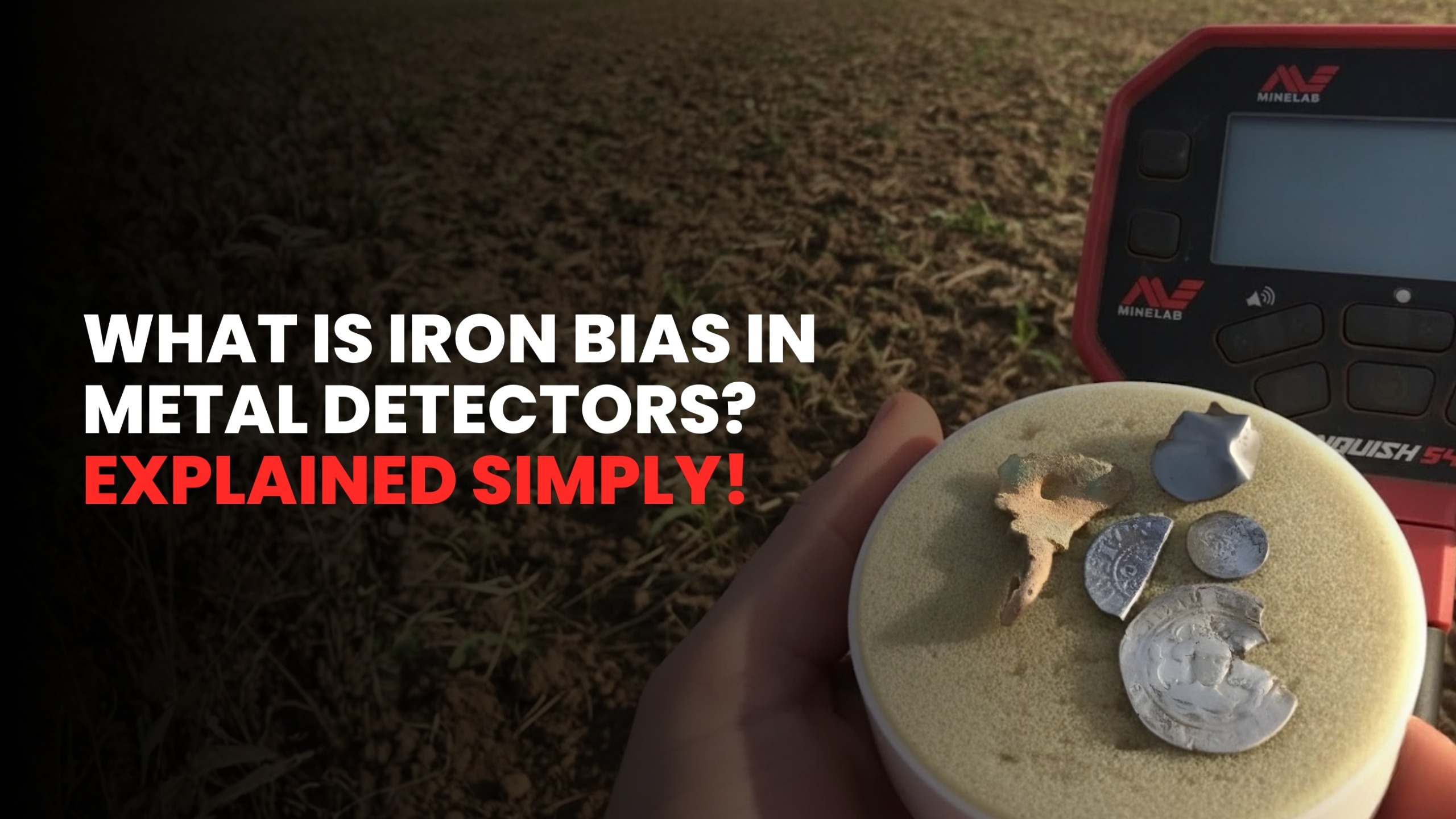
Have you ever dug up a rusty nail thinking it was a coin or relic? Every detectorist has been there. That’s exactly why modern detectors include a feature called Iron Bias. But what does it really do, and how does it help you find better targets? Let’s make it simple.
What Is Iron Bias?
Iron Bias is a setting that helps your detector decide whether a signal is valuable metal or just iron junk. Many iron objects, like nails or bottle caps, give confusing signals. Iron Bias tells the metal detector sensor to interpret those signals more accurately.
In short, higher Iron Bias helps you avoid junk. Lower Iron Bias helps you find mixed or hidden targets.
How Does Iron Bias Work?
To understand Iron Bias, you need a basic idea of the metal detector’s working principle. A detector sends electromagnetic waves into the ground. When these waves hit metal, they bounce back, and the machine reads the response.
But here’s the twist:
Iron often masks good targets like coins or gold.
Iron Bias uses smart processing to separate them. This is why it’s important in India’s mineral-rich soil, where signals often overlap.
Why Detectorists Use It
- Avoid digging unnecessary iron scraps
- Improve target identification
- Recover more relics and coins
- Make your metal and gold detector more accurate
If you’re curious about how metal detectors work or even how a metal detector works in physics, Iron Bias is one of the smartest features to explore.
For better accuracy in real conditions, try a Minelab metal detector — trusted worldwide for performance.